There is a recurring temptation in public policy to look at protected land and see unused capacity.
An open field becomes potential pasture.
A forest becomes potential timber.
A wetland becomes potential storage.
A park becomes potential revenue.
The language is usually practical.
Efficiency.
Multiple use.
Land management.
Economic value.
But beneath the language sits a deeper assumption:
Land is not fully useful until it is producing something legible to the market.
A February 2026 Florida Phoenix article examined legislation that would have required managers of state-owned conservation lands to identify grazable areas, consider leasing them to private cattle operators, and allow grazing where the land was determined to be appropriate. The proposals applied broadly to state conservation holdings, including parks and forests.
The bills later died at the end of the 2026 legislative session. The Senate version died in the Environment and Natural Resources Committee, while the House version died in Rules.
The legislation did not become law.
The instinct behind it remains worth examining.
A pasture and a preserve are not the same vacancy
From a distance, undeveloped land can appear empty.
There are no buildings.
No visible crop rows.
No factory.
No obvious transaction.
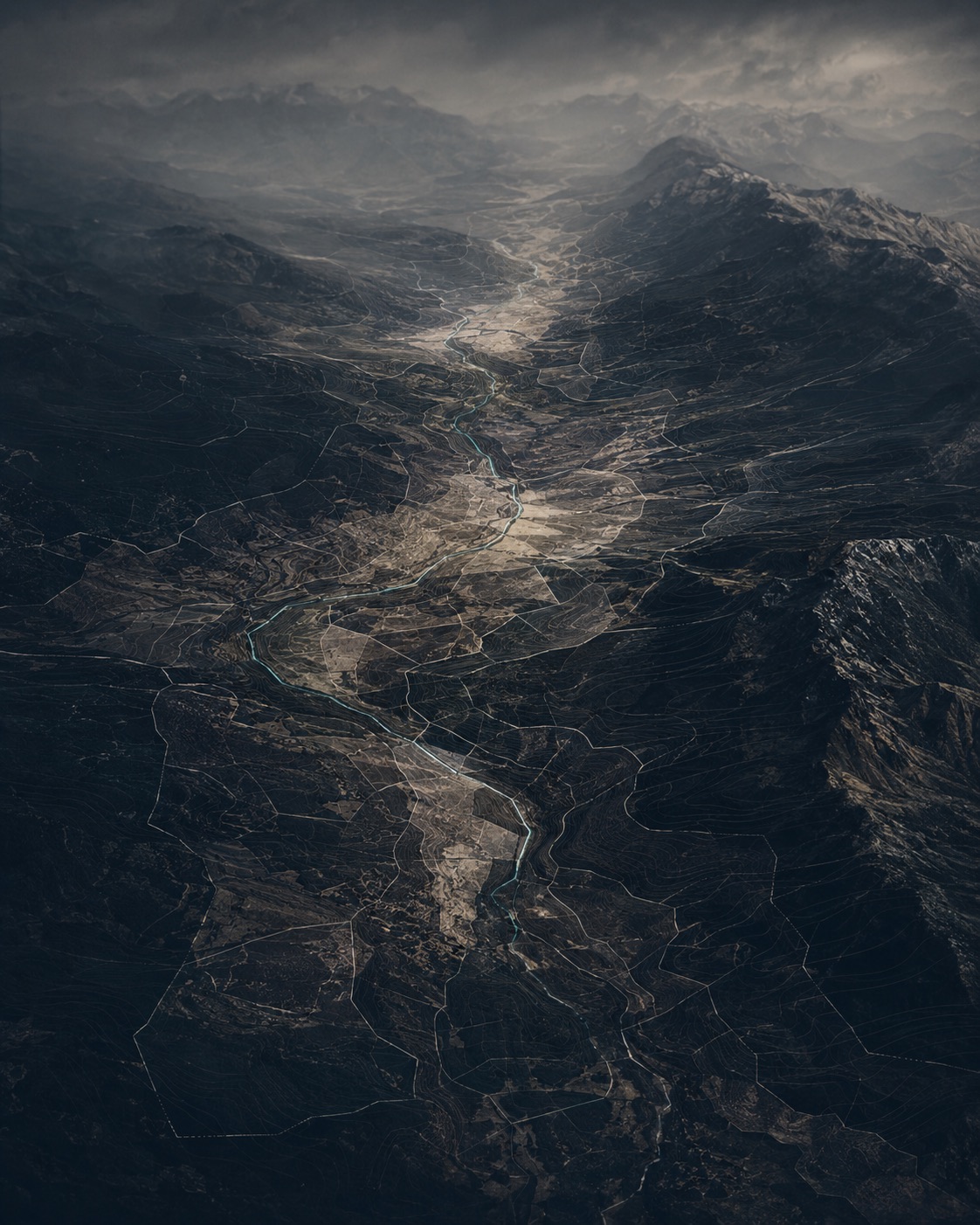
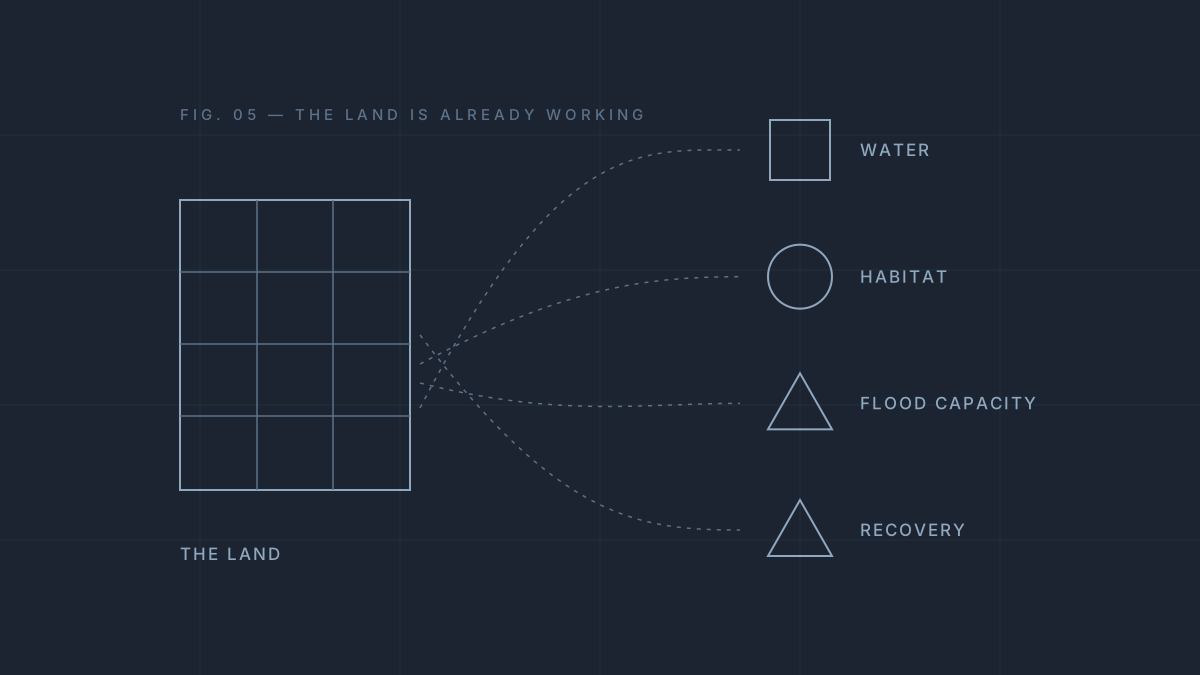
But conservation land is not empty.
It may be storing water.
Filtering runoff.
Holding flood capacity.
Protecting habitat.
Maintaining migration corridors.
Preserving native vegetation.
Supporting recreation.
Containing archaeological or cultural resources.
Offering a place where commercial use is intentionally limited.
These functions are easy to undervalue because they are distributed, preventative, and often invisible until they disappear.
A wetland does not issue an invoice for flood protection.
A forest does not bill the public for cooling, carbon storage, or habitat continuity.
A prairie does not submit a quarterly report describing the species it sustained.
The absence of a market transaction is mistaken for the absence of work.
That is an accounting failure, not a land-management insight.
The proposal was not simply about cows
Cattle grazing can be a legitimate management tool.
It can help control certain vegetation, reduce fuel loads, maintain some open habitats, and generate lease revenue under the right conditions. Florida already permits grazing on some public lands, particularly where improved pasture existed before state acquisition.
The deeper issue was not whether cattle should ever be present on public land.
It was whether the Legislature should shift grazing from a discretionary management option into something land managers were required to evaluate and, when deemed appropriate, accommodate.
The revised House bill required agencies to identify existing grazable lands, consider cattle leases against ecological, wildlife, and recreation goals, and permit leases on lands judged appropriate. It also prohibited converting native wildlife habitat into improved pasture.
Those safeguards mattered.
But so did the structural change.
The proposal inserted a preferred commercial use into the planning process for land already acquired for conservation and public benefit.
It did not merely authorize grazing.
It made the absence of grazing something that could require explanation.
The burden of proof was beginning to move
This is a quiet but important policy shift.
Under a conservation-first model, a proposed commercial use must demonstrate that it is compatible with the land’s purpose.
Under a utilization-first model, the land manager may be asked to explain why a potentially productive use is not being pursued.
The land has not changed.
The burden of proof has.
That shift can occur through a single word:
Must.
Managers must identify.
They must consider.
They must describe.
They must allow.
The official bill analysis stated that lands determined appropriate for grazing would have to be included in the management plan and made available for lease. If no land was found appropriate, the plan would need to explain that conclusion.
This may sound procedural.
Procedure is often where policy becomes durable.
A commercial use does not need to be explicitly favored if the process is designed to repeatedly surface it, justify it, and normalize it.
Multiple use can become cumulative use
Public land is frequently expected to serve many purposes at once.
Conservation.
Recreation.
Water protection.
Hunting.
Education.
Cultural preservation.
Fire management.
Agriculture.
Economic development.
Some of these uses can coexist.
But “multiple use” can become a comforting phrase for cumulative pressure.
Each new use appears modest when evaluated alone.
A lease here.
A road there.
A utility corridor.
An event facility.
A grazing area.
A concession.
A recreational improvement.
The landscape absorbs each decision separately.
The public eventually encounters the total.
This is one reason conservation lands require managers with discretion.
Ecological systems do not respond to legislative categories one at a time. They respond to the combined effects of fencing, trampling, nutrient loading, altered hydrology, invasive species, fire changes, traffic, and fragmentation.
A use can be individually defensible while collectively damaging.
Stewardship requires the ability to say not only whether a use is possible, but whether the land has already been asked to do enough.
Private use of public land is not automatically public benefit
Leasing public land to private operators can generate revenue and support an industry with deep roots in Florida.
That does not make the arrangement inherently improper.
But the public-benefit test should remain demanding.
Who receives the economic value?
Who carries the ecological risk?
Does the lease restrict public access?
Who pays for fencing, water infrastructure, restoration, monitoring, or damage?
Does the arrangement advance the conservation purpose for which the land was acquired?
Would the management benefit still justify the practice if no lease revenue were involved?
These questions are especially important because conservation lands were often purchased precisely to remove them from the ordinary pressures of development and production.
The public already made a choice about the land.
It chose restraint.
A later commercial use should not be evaluated as though the property were an unallocated asset waiting for a business model.
Florida has already answered a related question
The cattle-grazing proposal arrived shortly after a major political fight over plans for golf courses, hotels, and other development in Florida state parks.
Public backlash was broad and bipartisan. In 2025, Florida enacted protections limiting those kinds of commercial development and strengthening public notice requirements around changes to park management.
The two episodes are not identical.
Cattle grazing can have ecological uses that a hotel or golf complex does not.
But both controversies turn on the same underlying tension:
Are state conservation lands primarily places to be protected, or inventories of public assets that should be made more economically productive?
Florida residents have repeatedly shown that they do not experience state parks as surplus property.
They experience them as part of the public inheritance.
That attachment is not anti-agriculture, anti-business, or anti-growth.
It reflects an understanding that some forms of value depend on refusing to maximize every acre.
Stewardship includes knowing what not to add
Modern institutions are rewarded for action.
New programs.
New uses.
New revenue.
New partnerships.
New forms of access.
Maintenance rarely carries the same prestige.
Restraint carries even less.
Yet conservation is fundamentally a discipline of limits.
It asks what must remain unbuilt.
What must remain unconverted.
What must be allowed to recover.
What should continue without a transaction attached to it.
That does not mean freezing land into an imagined untouched state. Florida’s ecosystems require active management: prescribed fire, invasive-species control, hydrological restoration, habitat work, and sometimes carefully managed grazing.
But active management and commercial activation are not the same thing.
One begins with the needs of the land.
The other can begin with the existence of an economic opportunity.
The distinction matters.
The land manager’s first client is the land
The official analysis of the House bill emphasized that grazing decisions would consider ecological, wildlife, and public recreation goals. It also maintained a prohibition against converting native habitat into improved pasture.
Those provisions attempted to preserve professional judgment.
But the legislation still reflected a larger political impulse to direct that judgment toward a preferred use.
This is where institutional design becomes important.
Land managers need expertise.
They also need permission to follow it.
A biologist, forester, hydrologist, archaeologist, or park manager should be able to conclude that a use is technically possible but institutionally unwise.
Not every compatible use must be adopted.
Not every source of lease income must be captured.
Not every open area needs an additional purpose.
Good stewardship is not the maximum number of activities a landscape can endure.
It is the set of decisions that allows the landscape to remain whole.
The visible cow and the invisible system
Cattle are tangible.
You can count them.
Lease them.
Fence them.
Estimate revenue per acre.
The benefits of intact conservation land are less visible.
A connected habitat network.
A functioning watershed.
A native plant community.
A future recreational experience.
A species that remains present because enough land was left undisturbed.
Public policy is often drawn toward what can be counted easily.
But the easiest thing to count is not always the most valuable thing present.
This may be the quieter issue beneath the failed legislation.
The state was not simply considering whether cows could graze on public land.
It was deciding which forms of value deserve to be visible in the first place.
The land is already doing something
The cattle-grazing bills died.
That result should not end the conversation.
Florida will continue facing pressure to make conservation land serve more purposes, raise more revenue, accommodate more infrastructure, and demonstrate more visible economic value.
Each proposal will arrive with its own rationale.
Many will sound reasonable.
Some may be.
The discipline is to begin from the correct premise:
Conservation land is not idle land.
Its value does not begin when a lease is signed.
Its usefulness does not depend on commercial occupancy.
Its apparent emptiness may be the product the public purchased.
The land is already working.
The harder task is learning to recognize the work.
Source Note
This piece responds to Craig Pittman’s Florida Phoenix article, Florida Legislators Try to Moooove Cattle into State Parks and Forests, published February 5, 2026, and to the official analyses and legislative history of HB 1421 and SB 1658. The proposals would have required state conservation-land managers to evaluate grazing opportunities and permit leases on land found appropriate. Both measures died at the end of Florida’s 2026 legislative session.